40 common path of egress travel diagram
Download scientific diagram | Level 3 -Most Demanding Common Path of Egress Travel. from publication: Orfalea College of Business- Fire & Life Safety Analysis | This report details the ... Means of Egress Continuity Section 1003.6: "The path of egress travel along a means of egress shall not be interrupted by any building element other than a means of egress component as specified in this chapter. Obstructions shall not be placed in the required width of a means of egress except projections permitted by this chapter.
Aug 20, 2020 · The common path of egress travel distance exceeds the number listed Table 1006.2.1. This section of IBC is actually very important. In real practice, you may need to draw a dashed polyline on your floor plan to show the worst-case scenario of your occupants’ common path of egress.
Common path of egress travel diagram
Means of Egress: A continuous and unobstructed path of travel from any point in a building or structure to a public way that consists of the following three separate and distinct parts: • Exit access: The travel path or area that leads from where a person is located to the entrance to an exit. Where required by the building official, such diagram shall be posted. ... 1006.2.1 Egress based on occupant load and common path of egress travel distance. Please see the diagram below. ... The Maximum Common Path Of Egress Travel (CPET) is another complex yet important concept. The CPET is the distance that one must travel before reaching a point that they have 2 separate options of paths to take to egress the building.
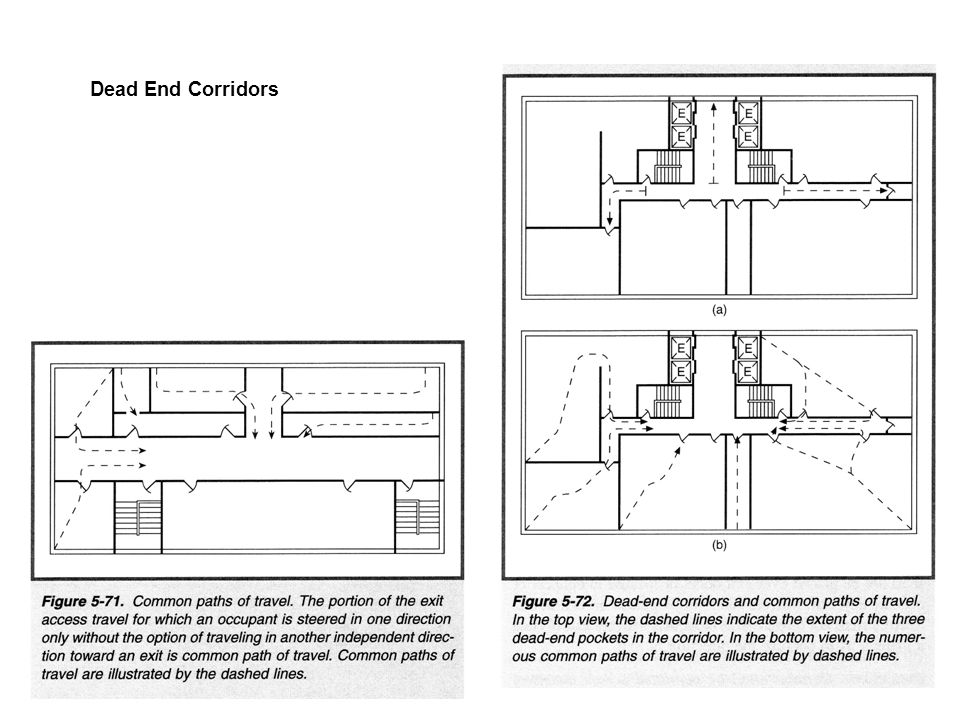
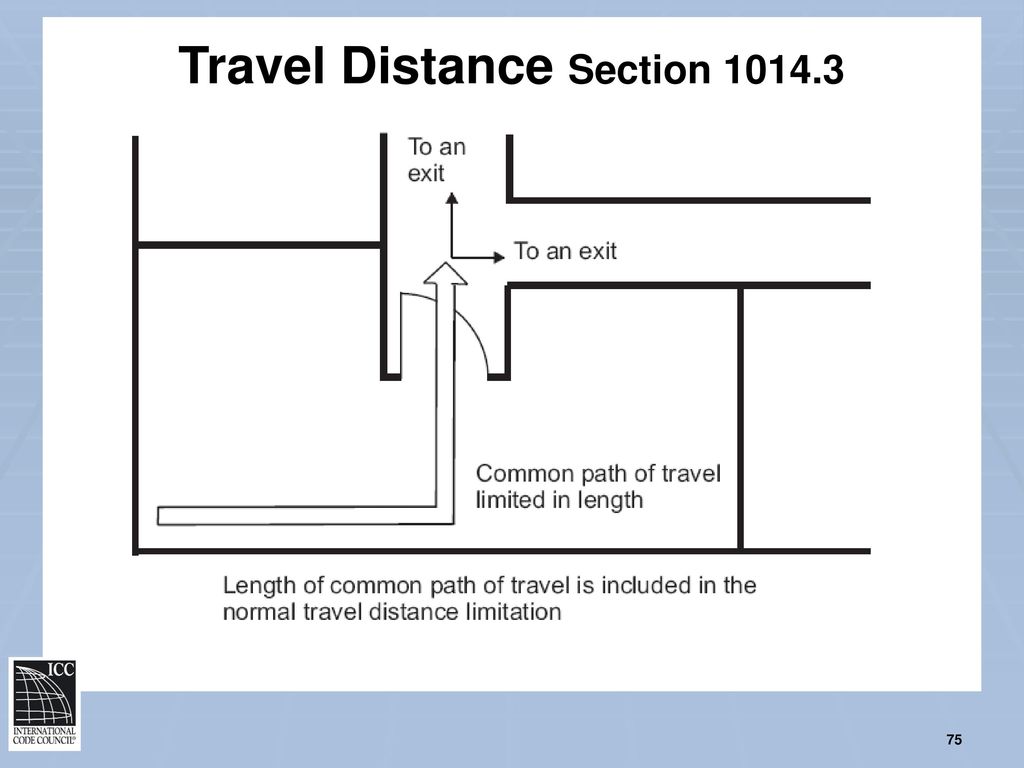
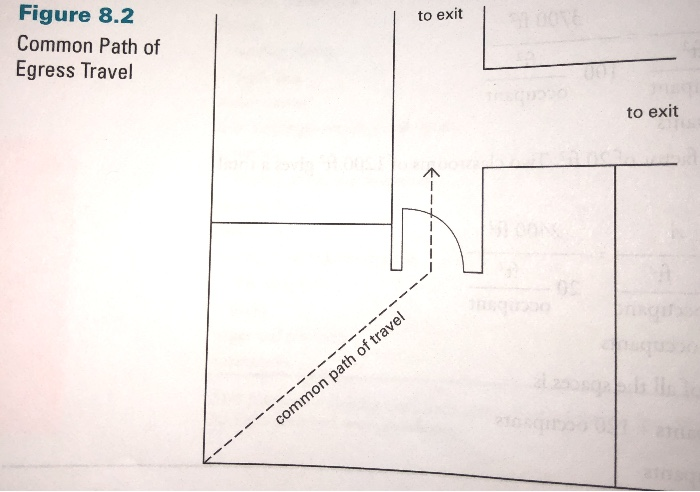
Common path of egress travel diagram. NFPA 101 would have required, in all likelihood, at least two stairs because of the strict 20 ft common path of travel limit for egress paths in assembly occupancies serving more than 50 people (12.2.5.1.2 and 13.2.5.1.2). In addition to adequate numbers of means of egress, sufficient egress capacity (width) is needed. paths of egress travel to two exits are available. Paths that merge are common paths of travel. Common paths of egress travel shall be included within the permitted travel distance. CORRIDOR. An enclosed exit access component that define s and provides a path of egr ess t rave l to an exit. DOOR, BALANCED. A door equipped with Common path of egress travel is "that portion of the exit travel distance measured from the most remote point within a story to that point where the occupants have separate and distinct access to two exits or exit access doorways." 2.1.2 Criteria for three or four exits (IBC 1006.2.1.1): The length of common path of egress travel distance in a Group S-2 open parking garage shall be not more than 100 feet. g. For the travel distance limitations in Groups R-3 and R-4 equipped throughout with an automatic sprinkler system in accordance with Section 903.3.1.3, see Section 1006.2.2.6.
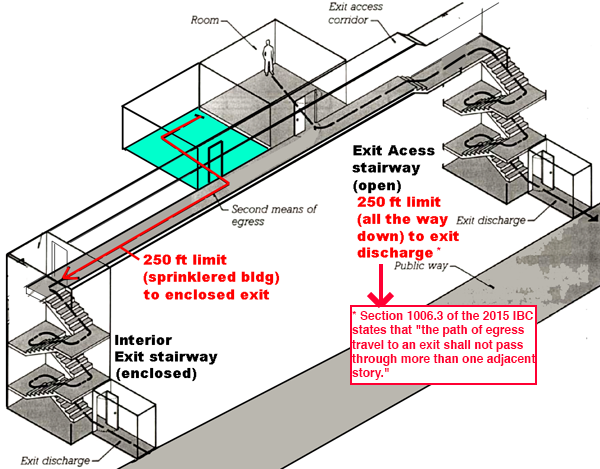
Exceptions: 1 & 2. . . . Assuming a B use, 35 occupants, without sprinklers, the maximum common path of egress travel distance per Table 1006.2.1 is 75 feet and per Table 1017.2, exit access travel distance without a sprinkler system is 200 ft . The common path of egress travel. The common path of egress travel is the part of the exit access taken before two separate paths to two different exits become available. It's like a fork in the road. The common path of egress travel distance is based on the occupancy type. Most occupancies have a maximum common path of egress travel distance ... COMMON PATH OF EGRESS TRAVEL. That portion of exit access which the occupants are required to traverse before two separate and distinct paths of egress travel to two exits are available. Paths that merge are common paths of travel. Common paths of egress travel shall be included within the permitted travel distance. A continuous and unobstructed path of vertical and horizontal egress travel from any occupiable space in a building or structure to a public way. A means of egress consists of three separate and distinct parts: • the exit access, • the exit, and • the exit discharge.
MEANS OF EGRESS BUILDING CODE COMPLIANCE DIAGRAMS Khaled Nassar 1 , Mohamed ElNahas 2 Abstract Means of egress can be defined as "a continuous and unobstructed path of travel from any point in a building or structure to a public way" [IBC]. The maximum common path of egress travel is also factored in. The “common path of egress travel” is defined as “that portion of the exit access travel distance measured from the most remote point within a story to the point where the occupants have separate and distinct access to two exits or exit access doorways”. 1006.2.1 Egress based on occupant load and common path of egress travel distance. Two exits or exit access doorways from any space shall be provided where the design occupant load or the common path of egress travel distance exceeds the values listed in Table 1006.2.1. travel distance: maximum length allowed is 300' with sprinkler system per sbc table 1017.2. level 03 existing diagram & occupant load details. project title & address: seal: common path of egress travel: maximum length allowed is 100' with sprinkler system per sbc table 1017.21 longest common path of egress travel = 34 ft. longest path of travel
2012 IBC Means of Egress 2012 IBC Means of Egress
7 Apr 2021 — Anyone know where the source information is located for measuring common path of egress travel distance? Some say the distance is from ...

23 Egress Diagrams ideas | egress, diagram, diagram architecture
Accessible means of egress must extend from all accessible portions of a room or space. The IBC specifies maximum travel distances to reach an exit. Accessible means of egress can share a common path of egress travel as allowed for means of egress by the applicable building or life safety code (§207.1). mezzanines served by an enclosed exit ...
UpCodes: Diagrams & Illustrations
2. The common path of egress travel exceeds one of the limitations of Section 1014.3. 3. Where required by Section 1015.3, 1015.4, 1015.5, or 1015.6. Where a building contains mixed occupancies, each individual occupancy shall comply with the applicable requirements for that occupancy.

Means of Egress with NFPA 130 | NFPA
The common path of travel shall not exceed 30 feet (9144 mm) from any seat to a point where an occupant has a choice of two paths of egress travel to two exits. Exceptions: For areas, such as box seats, galleries or balconies, serving not more than 50 occupants, the common path of travel shall not exceed 75 feet (22 860 mm).
of NFPA 101 Life Safety Code 2000 Edition Means of Egress ...
protected path until arrival at exit discharge or public way. b.) An enclosed exit access component that provides a path of travel to an exit. c.) A path of egress travel from one portion of a building through a fire-rated wall to another portion of a building which affords safety from fire and smoke. d.)
December 18, 2018 By Electronic Mail and U.S. Postal Mail ...
It was brought to my attention, that this video has an error in it. The 2 doors that are leaving the office suite needs to be separated by the required dist...
What are the egress requirements of a manufacturing facility?
The common path of egress travel shall not exceed 30 feet (9144 mm) from any seat to a point where an occupant has a choice of two paths of egress travel to two exits. Exceptions: For areas serving less than 50 occupants, the common path of egress travel shall not exceed 75 feet (22 860 mm).
2009 IBC Egress Issues in Commercial Buildings, May 25, ppt ...
Common Path of Travel Common Path of Travel is defined as “that portion of the exit access which the occupants are required to traverse before two separate and distinct paths of egress travel to two exits are available”.
Jonathan Ochshorn—ARCH 2614/5614
•[BE] COMMON PATH OF EGRESS TRAVEL. That portion of exit access travel distance measured from the most remote point of each room, area or spaceto that point where the occupants have separate and distinct access to two exits or exit access doorways. 2019 CBC •COMMON PATH OF EGRESS TRAVEL.
NCIDQ-Chapter 8 diagrams Flashcards | Chegg.com
Also, the means of egress chapter's 1-hour corridor requirement is not retroactively applied to existing buildings provided that the occupancy classification doesn't change. 11.What is the difference between travel distance and common path of travel? The Life Safety Code provides limitations for maximum travel distance and common path of travel.

Basics of Means of Egress Arrangement | NFPA | NFPA
2012 IBC Means of Egress Objectives Determine the requirements for arrangement of the means of egress facilities including: The remote location of doors and exits. The exit access travel distance. The common paths of egress travel. The egress through adjoining spaces. Determine the requirements for fire-resistance-
JULY 30, 2013
2. The common path of egress travel exceeds the limitations of Section 1004.2.5. 1004.2.5 Common path of egress travel. In occupancies other than Groups H-1, H-2 and H-3, the common path of egress travel shall not exceed 75 feet (22 860 mm). In occupancies in Groups H-1, H-2, and H-3 the common path of egress travel shall not exceed 25 feet (7620 mm).
Level 3 -Most Demanding Common Path of Egress Travel ...
COMMON PATH OF EGRESS TRAVEL. CORRIDOR. DOOR, BALANCED. EGRESS COURT. EMERGENCY ESCAPE AND RESCUE OPENING. EXIT. EXIT ACCESS. EXIT ACCESS DOORWAY. EXIT ACCESS RAMP. EXIT ACCESS STAIRWAY. EXIT DISCHARGE. EXIT DISCHARGE, LEVEL OF. EXIT, HORIZONTAL. Deleted EXIT PASSAGEWAY. FIRE EXIT HARDWARE. FIXED SEATING. FLIGHT. FLOOR AREA, GROSS. FLOOR AREA, NET.

Common path pf egress travel – ARE 5.0 Community
Please see the diagram below. ... The Maximum Common Path Of Egress Travel (CPET) is another complex yet important concept. The CPET is the distance that one must travel before reaching a point that they have 2 separate options of paths to take to egress the building.
Presentation: NYC Construction Code - Chapter 10 Means of Egress
Where required by the building official, such diagram shall be posted. ... 1006.2.1 Egress based on occupant load and common path of egress travel distance.
CHAPTER 2 MEANS OF ESCAPE
Means of Egress: A continuous and unobstructed path of travel from any point in a building or structure to a public way that consists of the following three separate and distinct parts: • Exit access: The travel path or area that leads from where a person is located to the entrance to an exit.

Common Path 8-0
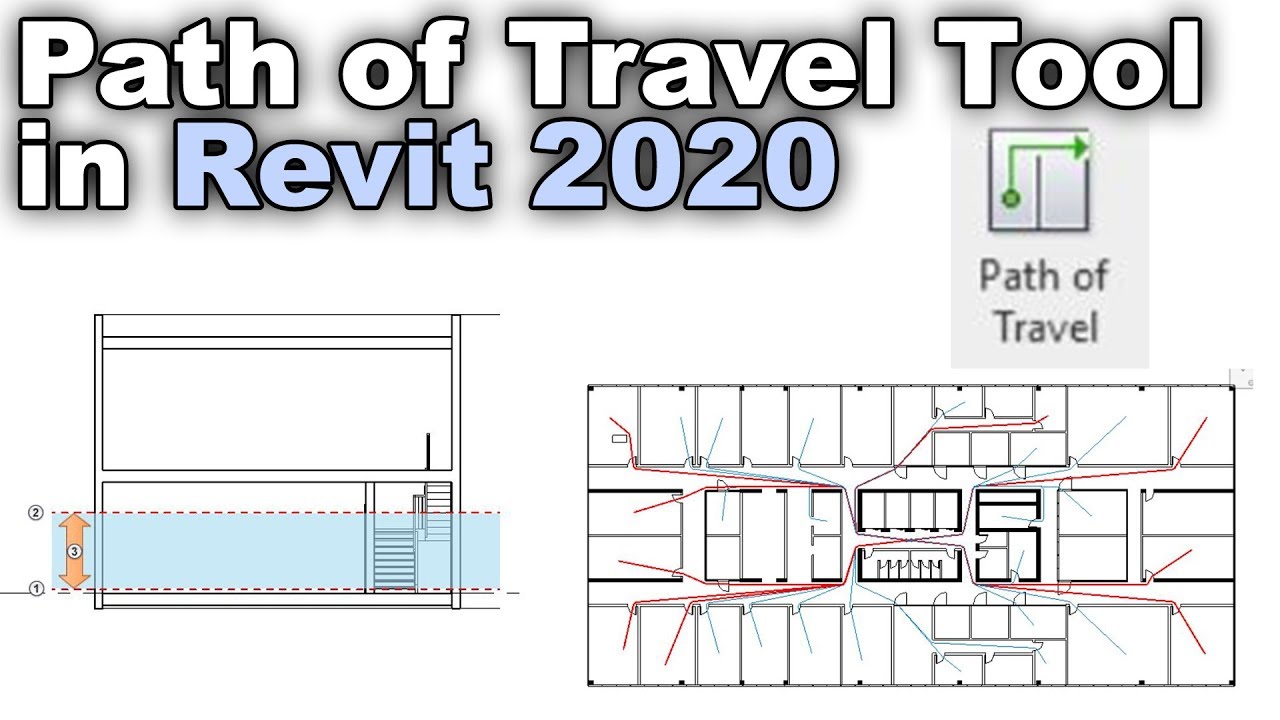
Revit 2020: Path of Travel In-dept Tutorial

AC 029 - Number of Exits, Travel Distance & Common Path of Travel
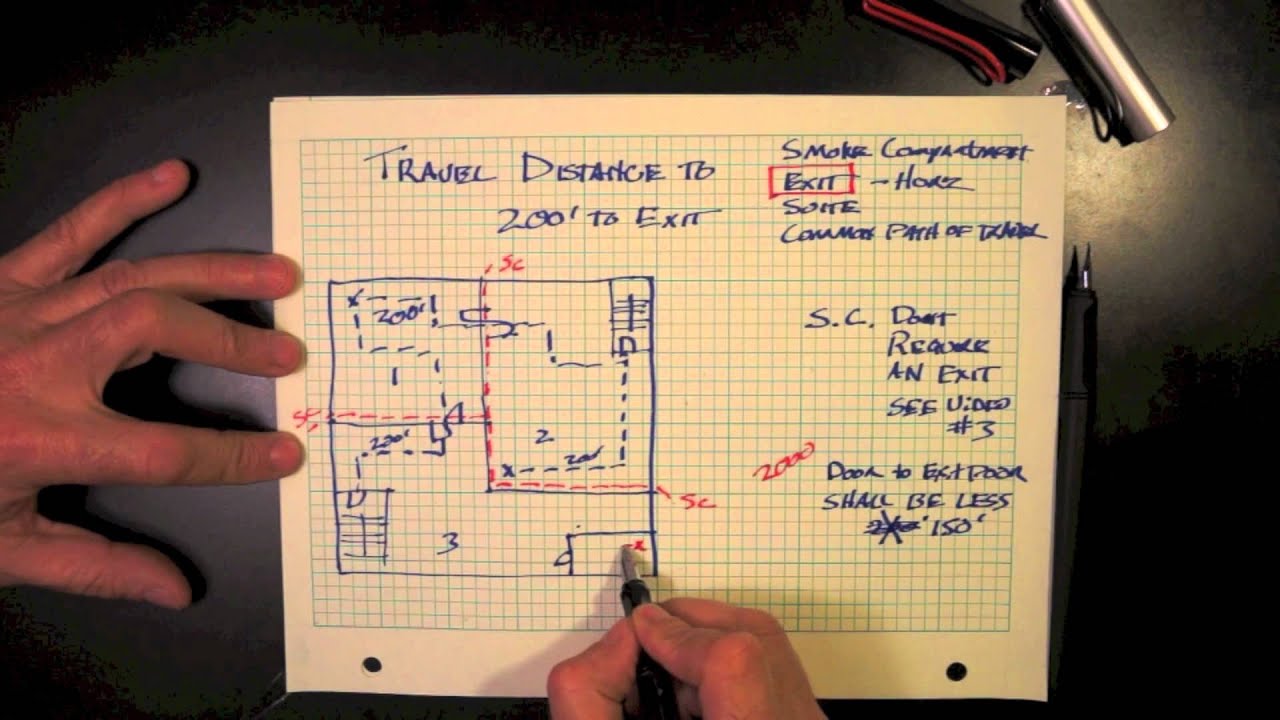
Travel Distance to Exit video 2-0

Basics of Means of Egress Arrangement | NFPA | NFPA
CHAPTER 2 MEANS OF ESCAPE
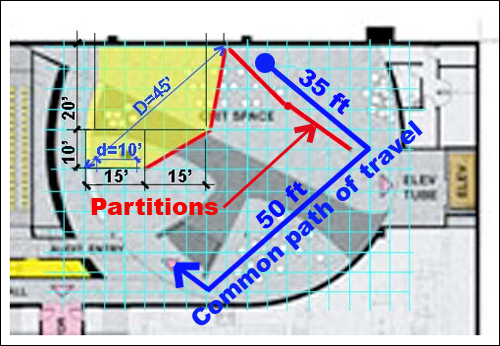
more on implausible egress in Milstein and Sibley Halls ...
IBC/Architectural Refresher
Egress 1. Calculating occupancy load

Means of Egress - Building Codes - Northern Architecture
![PDF] A Consideration On Common Path Length And Single ...](https://d3i71xaburhd42.cloudfront.net/845391b06a568baea981aefb7423735e46586f24/3-Figure1-1.png)
PDF] A Consideration On Common Path Length And Single ...

Means Of Egress - Interior Design - Northern Architecture
Gallery of Eco Circle / Studio Avana - 27
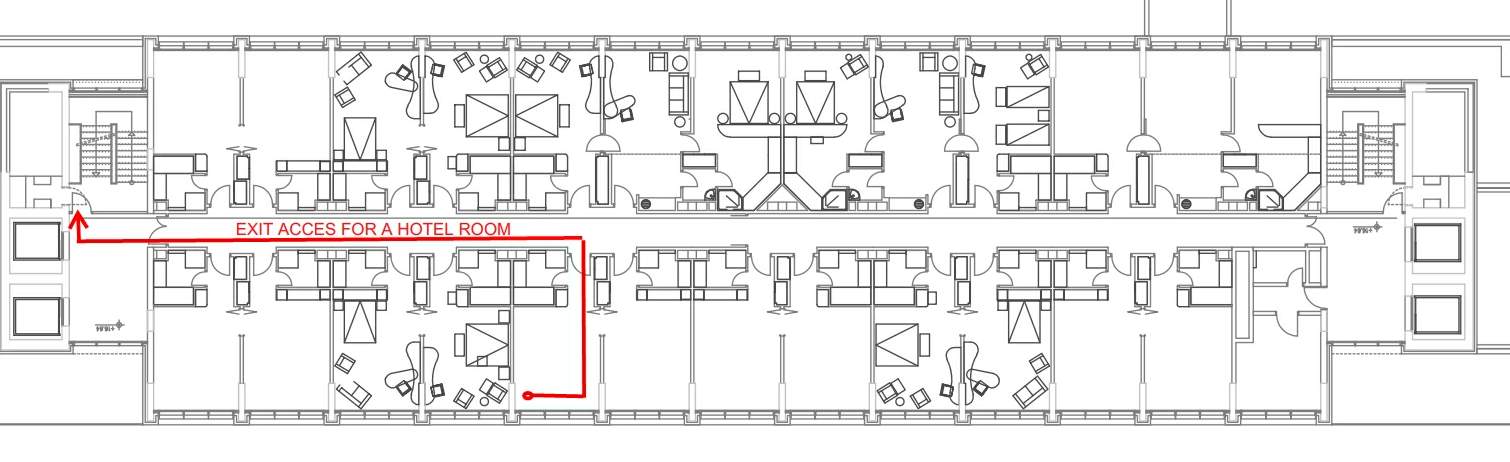
Hotel Fire Case
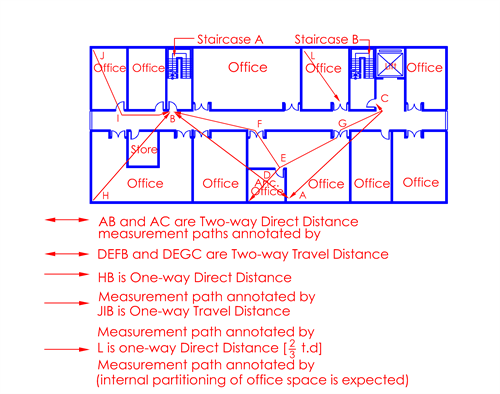
Clause 2.2 Determinations of Exit Requirements | SCDF
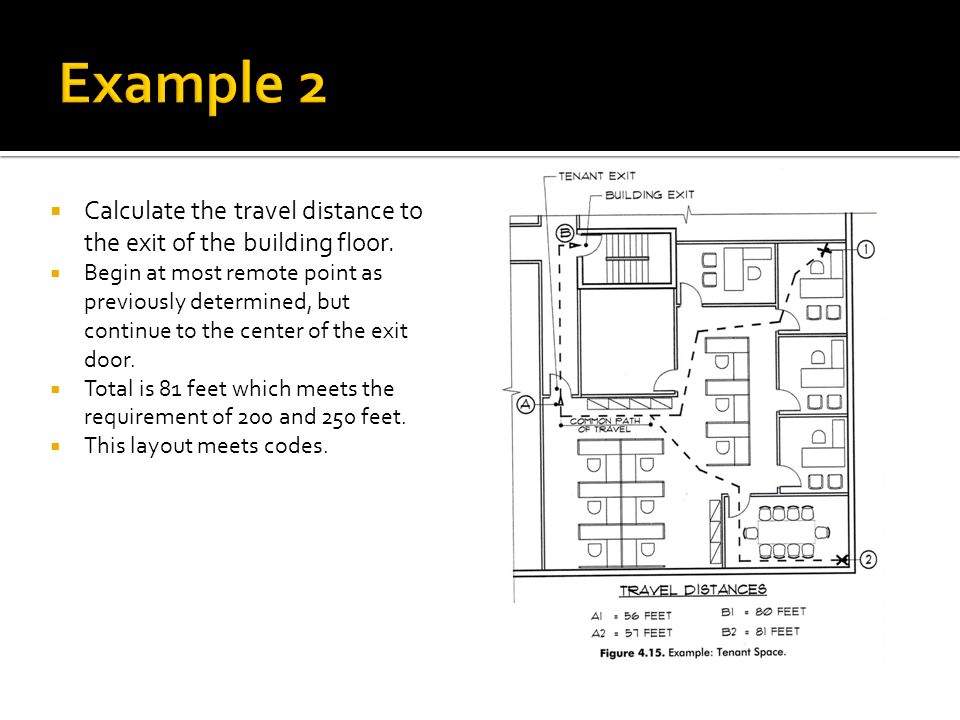
Means of Egress Chapter ppt video online download
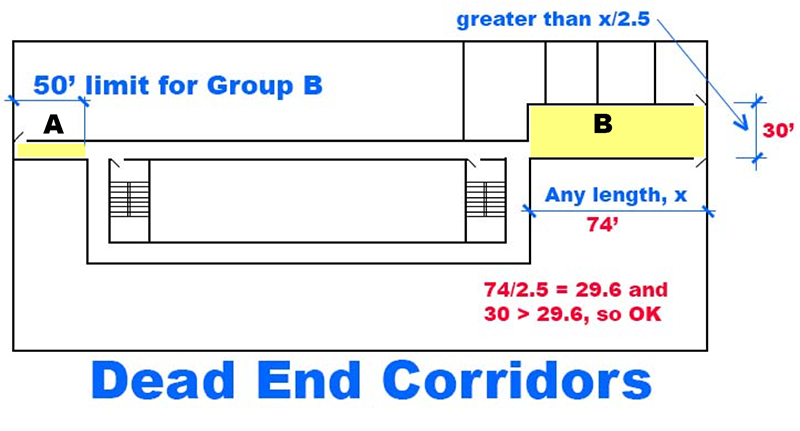
Jonathan Ochshorn—ARCH 2614/5614
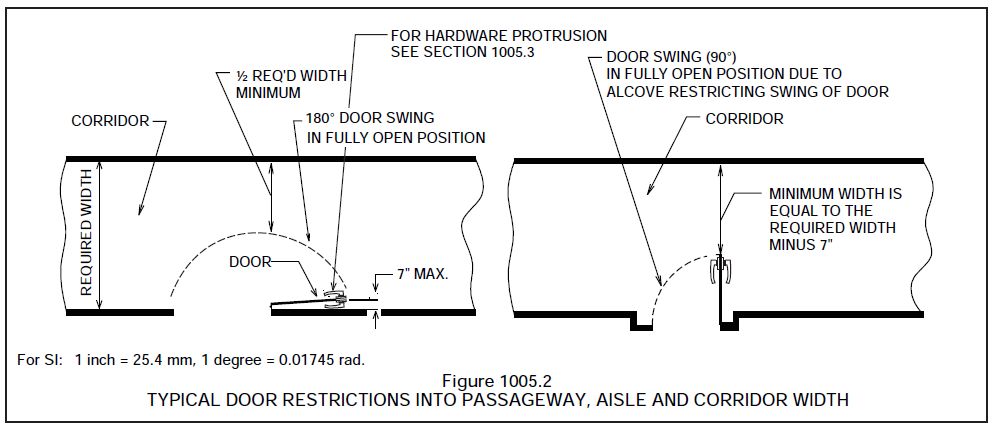
Decoded: Door Swing and Encroachment - I Dig Hardware ...

Exit Discharge Requirements (Definition, Level & Exceptions)
2018 BCAC EGRESS WG PROPOSED CODE CHANGES

AC 029 - Number of Exits, Travel Distance & Common Path of Travel

Level 3 -Most Demanding Common Path of Egress Travel ...
EGRESS

FIRE EGRESS ONE WAY VS TWO WAY TRAVEL DISTANCE


Comments
Post a Comment