42 fencing parry positions diagram
For a right-handed fencer, the inside line is to the left, and the outside line is to the right; thus the parries prime, quarte, and septime deflect the ... Riposte — a counterattack by the fencer who has blocked the opponent with a parry. The stance. The correct fencing stance is as follows: The correct position involves pointing the front foot straight forward, with the back foot at a 90 degree angle to it. The feet should be around 91cm (3ft) apart.
May 01, 2004 · Parry: A defensive action where a fencer blocks the opponent’s blade. Penalty hit: A hit credited to a fencer when the opponent commits an offence after a warning. Plastron: Protective clothing worn under a fencer’s jacket. Prime: The first of eight defensive positions in fencing. Quarte: The fourth of eight defensive positions in fencing.
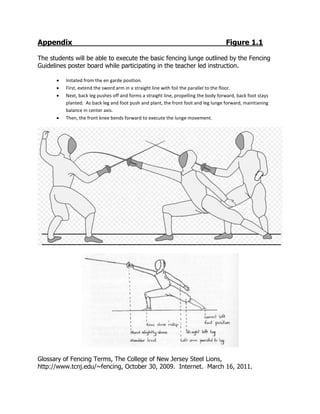
Fencing parry positions diagram
fencing distance, parries, and basic fencing style. 4. Take care of your foil. Slightly bend down the blade with a bit of an arc. 5. Control your opponent’s foil and you will control the bout. 6. Control the fencing distance which will help you control the bout. 7. Try to use the Ballestra and the Pattinando (cross-over) when facing a short fencer with limited reach. 8. When directing … 13.09.2006 · The parry-riposte is one of the most common techniques in scoring touches you will see in a fencing match, again at any level. The parry-riposte is often done in a sequence of two or three, viz. the fencers quickly switch between attacking, defending, attacking, defending - back and forth until a touch is scored or one of the fencers backs down. At the top level of … The goal of a wheelchair fencing play is just like that of the regular able-bodied fencing - to hit an opponent in the chosen areas during a duel. Unlike in the regular fencing game, every fencer competes in a chair anchored to a particular position. The target areas and number of hits needed differ in every event.
Fencing parry positions diagram. In the Getty, Pisani-Dossi and Florius manuscripts is a schematic diagram called il Segno della Spada — the Sign of the Sword — a full-page illustration of a man, intersected by seven swords, and surrounded at the cardinal points by four creatures wearing four golden collars.The segno is a visual memory device meant to summarize and encode core material for the reader. Below is a diagram showing where the Six fencing positions for Sabre are assuming the fencer is right handed (sword arm indicated) the Target has been Quartered to show the High and Low line Guards (note the offensive/defensive position is an adaptation of tierce and quarte). Sword The Sabre target is everything above the waist. This Quinte: (Pronation) To protect the head … Parry 4 defends the inside high line, and Parry 6/3 the outside high line. Understand that these parries are often taught incorrectly. With few exceptions, a parry is not a set position on a diagram in a fencing manual. Rather parries are the mobile defense of envelopes of space. Dec 13, 2016 · Parry names and numbering have changed through the ages. Every region/weapon-system has its own names for the parries, and may also have its own parry positions and interpretations. The important thing to remember is the purpose of the parry: a defensive action made against the attack of the opponent's blade, which allows the defendant to ...
Free fencing application to design your project. 28/03/2018. Betafence released a new version of its application in order to help you draw your own fencing project, like a real architect. In just a few steps, you can create a rendered picture of your project, visualizing your future panels, railing system or rolls installed around your house ... Parry cheatsheet - love the parry 1 AKA Dracula's cape :) Epee Fencing, ... mindhost: “Various Olympic or sports fencing related infographs and diagrams. Prime / First / Parry 1 The fencer on the right scopes up his opponents blade with his hand high and point down. His hand is pronated (you can tell by the direction of the bend of his blade - curving with his point towards his opponent). Nov 03, 2017 · Blog, Fencing / By Robin Catling. By Robin Catling. To parry: to defend yourself from a weapon or an attack by blocking or pushing the weapon away. In sports fencing there are nine parries commonly in use. The positions are the same at foil and epée, we’ll leave aside the variations at sabre for now. The nine parries are spread across the notional lines of defence: high, low, inside and outside (which we’re illustrating for a right-hander).
From the basic fencing position, extend your right foot forward as far as possible without overstretching or losing balance. As you lunge towards your opponent, extend your sword arm and engage your opponent with a stab or slash. Flunge The flunge is a move used in saber fencing. It is basically a flying lunge, hence the name. The parry is pretty much the same. The current definition ("A parry is a fencing bladework manoeuvre intended to deflect or block an incoming attack.") mentions both deflection and blocking and seems pretty good as such. 134.153.30.12 14:31, 2 December 2008 (UTC) Positions or Parries. The classification is a good start. Parries and Quadrants of Control. When you parry or oppose an opponent's blade in any quadrant, you block them in the quadrant where you find them, and you prevent them from passing directly to the adjacent quadrant on the same level (e.g., if the contact is in 4, the opponent can't move right into the other upper quadrant; your blade's ... Find this Pin and more on It's just fencing by Smiljana Ciric. Blade Work eith the Sport Sword. In A Legacy of Historical Gleanings (1875) by Catharina Van Rensselaer Bonney, we find this passage in a letter from Rensselaer Van Renssel... Infographic explaining fencing at the Olympics.
Fencing Lesson Plan-JYoung-002
Defense for sword fighting techniques is just as necessary, and the primary trick of fighters during the medieval times was to avoid where the enemy's strike / attack falls; they could easily do so by sidestepping, slipping, ducking, or dodging and these were commonly followed by parries, blocks, deflections, and counterattacks.
KONAMI®
The foible is closer to the tip, and is the weaker part of the blade in regards to fencing. In fencing, it is best to parry with the Forte, as it being the stronger part of the blade it will be stronger in a parry, especially against the Foible. The Foible should be used for attacks, as with cut-and-thrust fencing the primary attacks are cuts.

I made this chart about different ways of throwing a hew in ...
Left handed diagrams for parry positions : Fencing. Preview Url reddit.com. Nomorsiapa.com - Might help to think of inside/outside and high/low instead of left/right. Parry 4 is the high inside parry, parry 8 is the low outside parry, etc. Glossary of fencing - Wikipedia.
Beginning Fencing HPR 1200 Fencing ~ Study Guide What is ...
Basic Fencing Blade Positions (PDF) The attached diagrams comes to us from the Three Swords Fencing Club in Traverse City, Michigan. The fencing community is a wonderfully collaborative one, where we are happy to help our fellow fencers pass on the art and science of our sport. My thanks to Doug Schultz for allowing us to use his material.

Fencing Doodle Man And Woman Isolated On White Background ...
Below is a diagram showing where the Six fencing positions for Sabre are assuming the fencer is right handed sword arm indicated the Target has been Quartered to show the High and Low line Guards note the offensivedefensive position is an adaptation of tierce and quarte. If your attack is parried theres always time or it often seems like theres time to take a counter-parry if youre …
FENCING IV(ÉPÉE)
Mal-Parry: French for "bad parry". A poorly achieved parry, which fails to block the attack. Match: is the total of the bouts between two fencing teams. It is sometimes used informally to refer to combat. Parry: Defensive Action that stops an offensive action. If this stop consists only of moving, it is called parry with distance or ...
Parry and positions - exercise 3
These 8 parries take their names from the eight hand positions in fencing-so the position of the blade in the stance represents the quadrant of the body it is designed to protect. Each position is depicted on the diagram to the left, e.g. a parry 6 will generally be executed from a Sixte (number 6) position if it is a normal simple parry.

Blade Work eith the Sport Sword. | Fence, Fencing sport ...
A long edge Zwerhaw from the left, to the head (the upper left opening), as a full strike that goes through the target completely - once you perform one Zwerhaw in sparring, it is very easy to keep sending the Zwerhaw from side to side, to both high and low openings (zum Ochs und zum Pflug).
Fencing Sport Posters | Redbubble
04.02.2016 · PART 5.3: FENCING PARRIES Traditional Parries Originally the defense system included eight parries for the protection of the four lines of target, there are a total of 9 parries comprising of the fencing parry system. The parries of prime (one), seconde (two), tierce (three), quarte (four), quinte (five), sixte (six), septime (seven), octave (eight)…

Parry (fencing) - Wikipedia
In the following diagrams the black blade is ours, pointing toward the opponent, and the red blade is their, pointing somewhat toward us: In the leftmost diagram we have "won" the centre, and can shoot the point directly at their face (of course they can parry this, but this leads to either of the other two situations).

Tonus Stock Illustrations – 76 Tonus Stock Illustrations ...
For epee (and foil), each line has two parry positions associated with it: -- the high-inside line (head/chest) is defended by parries 1 and 4 -- the high-outside line (arm/shoulder) is defended by parries 3 and 6 -- the low-outside line (flank/leg) is defended by parries 2 and 8 -- the low-inside line (belly/groin) is defended by parries 5 and 7
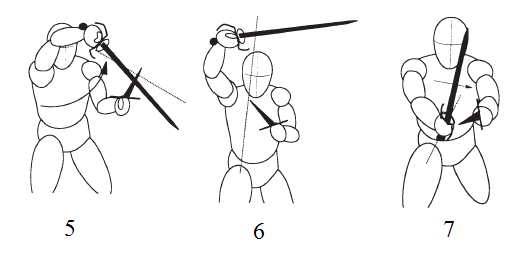
Cut-and-Thrust Fencing Beginner Course (Iron Thorn Manual 1st ...
Fencing with a wheelchair is similar to fencing on feet aside from movement in the lower half. The wheelchairs are in a fixed position and your legs are strapped in place. From here, you continue to fence using right of way/priority (sabre and foil). Target areas and general rules of fencing still apply.

Glossary of actions on the blade with examples
Fencing parry positions diagram November 1, 2007 by ivlcoach Just take note this concept for now: The space that is: Up and to the outside of your body is in SIX(‘th) line Up and across your body is in FOUR(‘th) line Down and to the outside is in EIGHT(‘th) line Down and across is SEVEN(‘th) line The default on-guard position puts your wrist and weapon into SIX.

Sensors | Free Full-Text | Estimation of Full-Body Poses ...
15.03.2021 · 8 Fencing Positions Page 1 Line 17qq Com from img.17qq.com For more anatomy content please follow us and visit our website: They are the only two direct parrying positions really needed. Position taken before fencing commences. A tactic in which a fencer executes a. We hope this picture fencing epee scoring zones diagram can help you study and research. …

How to Understand Basic Fencing Terminology: 13 Steps
I thought that one thing The Fencing Master lacked was any explanation of the parry positions. Other books by Arturo Pérez-Reverte sometimes have helpful diagrams, and this would have been a good candidate. I like the system. There are three basic variables, high and low, inside and outside, and the position of the hand.

Fencing Sport – A Combat which can't be more artistic - Ataax
Sabre Fencing... the target is based on whats available while on a horse... position #6 is over the head to protect a back cut... #Fencing #Sport. AquaMarine20. Fencing, Swimming, and Ballet ... Lines of engagement/parry numbers. Just take note this concept for now: Ángeles Téllez. Diabetis. Naval History. Navy Ships.

Frontiers | Quantifying Fatigue in the Rugby Codes: The ...
For a right-handed fencer, the inside line is to the left, and the outside line is to the right; thus the parries prime, quarte, and septime deflect the opponent's blade to the left (inside), while the parries seconde, tierce, sixte, and octave deflect the opponent's blade to the right (outside), as shown.

How to Understand Basic Fencing Terminology: 13 Steps
Left handed diagrams for parry positions. Épée. Hi folks, my coach is talking about parries at various positions and I keep getting them mixed up because he's teaching his right handed class and I'm very much left-handed. I'm trying to remember what each of these positions are so I can better communicate with my coach but it's really hard ...
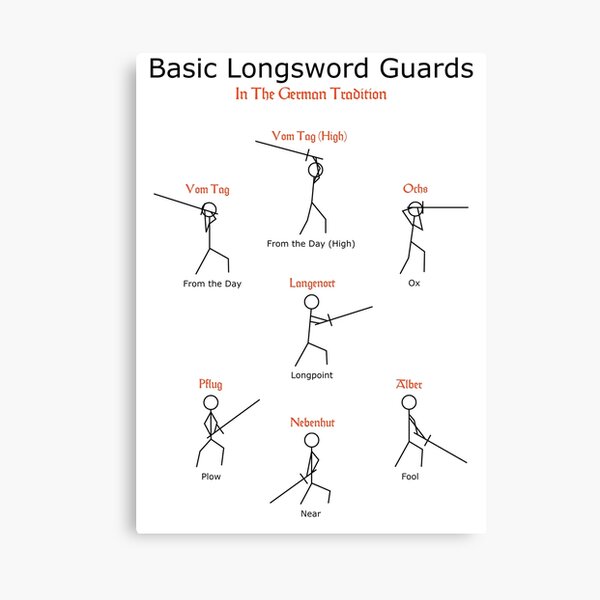
Fencing Canvas Prints | Redbubble
The goal of a wheelchair fencing play is just like that of the regular able-bodied fencing - to hit an opponent in the chosen areas during a duel. Unlike in the regular fencing game, every fencer competes in a chair anchored to a particular position. The target areas and number of hits needed differ in every event.
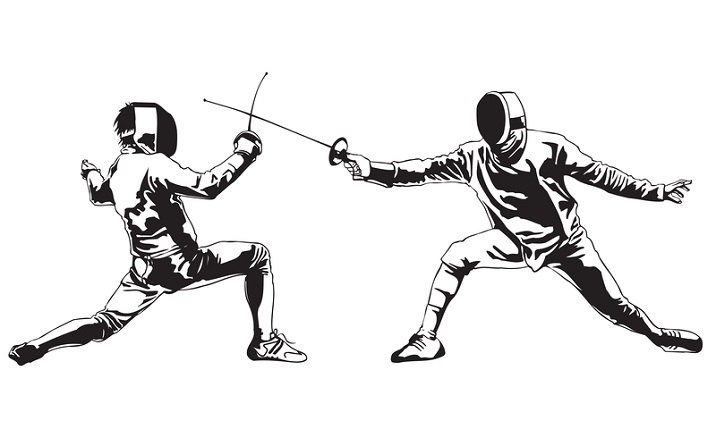
Fencing - Quick Guide
13.09.2006 · The parry-riposte is one of the most common techniques in scoring touches you will see in a fencing match, again at any level. The parry-riposte is often done in a sequence of two or three, viz. the fencers quickly switch between attacking, defending, attacking, defending - back and forth until a touch is scored or one of the fencers backs down. At the top level of …

dare to dream, fence extreme: 2011
fencing distance, parries, and basic fencing style. 4. Take care of your foil. Slightly bend down the blade with a bit of an arc. 5. Control your opponent’s foil and you will control the bout. 6. Control the fencing distance which will help you control the bout. 7. Try to use the Ballestra and the Pattinando (cross-over) when facing a short fencer with limited reach. 8. When directing …
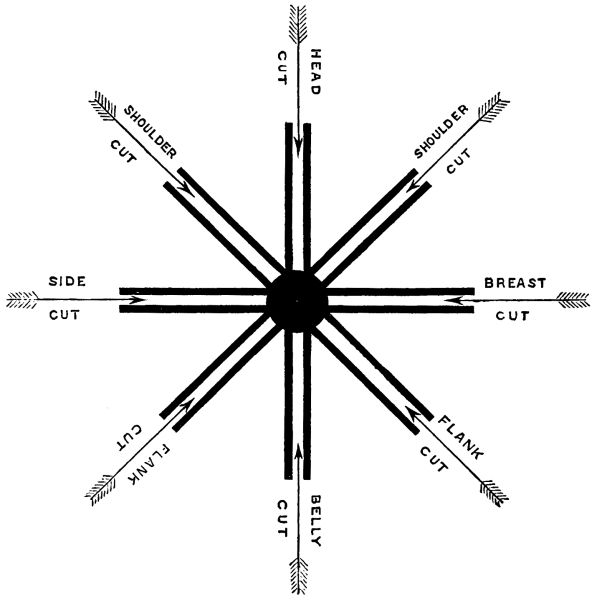
The Project Gutenberg eBook of A New System Of Sword Exercise ...

Process Documentation: Visual Book | by Michael Wang | Medium
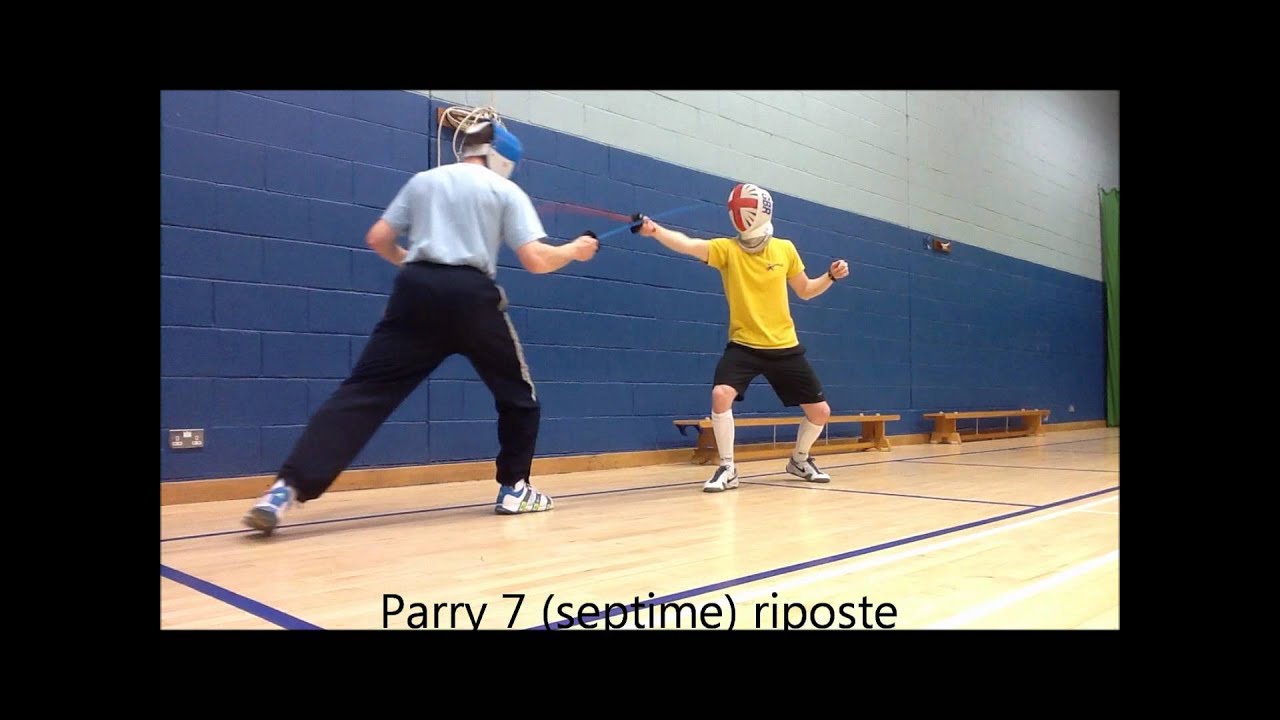
Fencing Parries

The Quadrants in the Sport of Fencing

3,038 1900s Photos - Free & Royalty-Free Stock Photos from ...
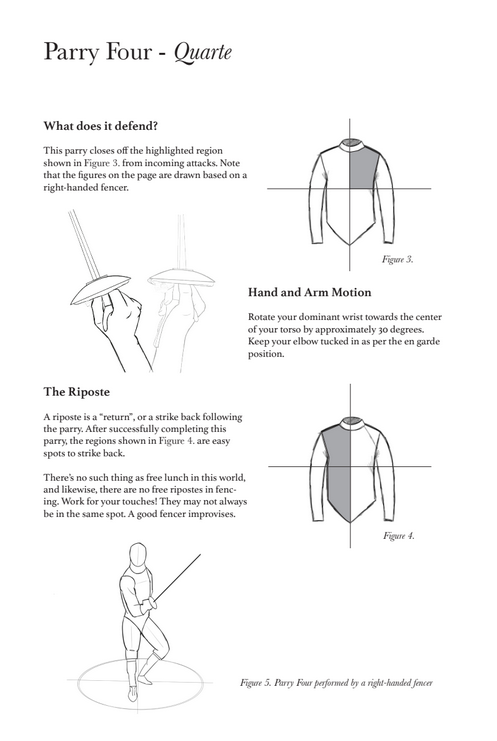
Process Documentation: Visual Book | by Michael Wang | Medium
Clispeed 11PCS/Set Resistance Bands Set Fitness Exercises ...
Rules for Competitions, 2006 1 Book 1

How to Understand Basic Fencing Terminology: 13 Steps
Technical rules ang

Parry (fencing) - Wikiwand
How Fencing Equipment Works | HowStuffWorks

The Basics of the Fencing Lunge

3rd vs 4th parry : r/Fencing

Debate Topic: The "Flick" attack should be continued as a ...

Radcliffe Sword Club - Fencing Terminology
Geometrical analysis of motion schemes on fencing experts ...
The Basics of Fencing

Fencing « Swordplay & Swashbucklers « Page 2

Fencing movements: Stances - ActiveSG

Nine Parries - West Devon Swords


Comments
Post a Comment